Nicotine Addiction: How It Works (The Science)
Medical Disclaimer
This article is for informational purposes only and does not constitute medical advice. Always consult a healthcare professional before making changes to your health routine. If you're experiencing a medical emergency, call 911 or your local emergency number.
Read our full medical disclaimer →Your brain is the most complex structure in the known universe, with roughly 86 billion neurons connected by trillions of synapses, running on a precisely calibrated cocktail of neurochemicals. And nicotine, a simple molecule produced by a plant to kill insects, has figured out how to slip past every defense and rewire the entire system in its favor.
This isn’t a metaphor. Nicotine physically restructures your brain. It changes which receptors exist, how many there are, how your reward circuitry fires, and what your baseline “normal” feels like. Understanding this machinery at a granular level isn’t just academically interesting. It’s the key to understanding why quitting is so difficult and what strategies actually work.
The Molecule: Nicotine’s Chemical Profile
Nicotine is an alkaloid, a nitrogen-containing compound produced by the tobacco plant (Nicotiana tabacum) as a natural insecticide. Its chemical formula is C10H14N2, and its molecular structure is remarkably similar to acetylcholine, one of your brain’s most important neurotransmitters.
This molecular mimicry is the foundation of everything that follows. Nicotine fits into acetylcholine receptors like a skeleton key. Close enough to activate them, but different enough to produce abnormal signaling patterns.
The 10-Second Journey
When you inhale cigarette smoke, here’s what happens in your body:
-
Lungs (0-2 seconds): Smoke reaches the alveoli, tiny air sacs with extremely thin membranes designed for gas exchange. Nicotine, being both water- and lipid-soluble, crosses these membranes almost instantly into pulmonary capillaries.
-
Pulmonary veins to left heart (2-4 seconds): Nicotine-rich blood flows from the lungs to the left atrium and ventricle.
-
Arterial delivery to brain (4-10 seconds): The left ventricle pumps nicotine-laden blood directly to the brain via the carotid arteries. Nicotine crosses the blood-brain barrier with ease due to its lipophilic properties.
Total transit time: approximately 7-10 seconds. This is faster than intravenous injection, which must travel through the venous system and the right side of the heart before reaching the lungs and then the brain.
The speed of delivery is pharmacologically crucial. Research has consistently demonstrated that the faster a psychoactive substance reaches the brain, the greater its addictive potential. This rapid delivery is what makes inhaled nicotine far more addictive than nicotine absorbed through the skin (patches, roughly 60-120 minutes to peak) or oral mucosa (gum, roughly 20-30 minutes).
The Bottom Line: Nicotine reaches your brain faster via cigarette smoke than almost any other drug via any common delivery method. Each puff is a separate, near-instantaneous hit to your reward system.
The Receptor System: Locks, Keys, and Extra Locks
How nAChRs Work
Nicotinic acetylcholine receptors (nAChRs) are ligand-gated ion channels, biological gates embedded in nerve cell membranes that open when the right molecule binds to them. When they open, they allow positively charged ions (sodium, calcium) to flow into the neuron, causing it to fire.
Your brain has many subtypes of nAChRs, each made of different combinations of subunit proteins. The subtype most relevant to addiction is the alpha-4 beta-2 (α4β2) receptor. This receptor is densely concentrated in the brain’s reward pathway, specifically in the ventral tegmental area (VTA) and the nucleus accumbens.
When acetylcholine binds to these receptors, it produces normal signaling: regulated, proportional response. When nicotine binds to the same receptors, it produces a stronger, longer-lasting activation. Nicotine is what pharmacologists call a partial agonist at α4β2 receptors. It activates them, but not to the full extent of the natural neurotransmitter. What it lacks in individual potency, it makes up for in two critical ways:
- It arrives in massive concentrations. Natural acetylcholine signaling is tightly controlled. Nicotine floods the system.
- It resists enzymatic breakdown. Acetylcholine is rapidly broken down by acetylcholinesterase. Nicotine is not metabolized by this enzyme, so it lingers at the receptor much longer.
The Dopamine Cascade
When nicotine activates α4β2 receptors in the VTA, it triggers the release of dopamine into the nucleus accumbens. This is the brain’s reward signal, the same pathway activated by food, sex, social connection, and every addictive drug.
Nicotine-induced dopamine release is approximately 150-200% above baseline, according to microdialysis studies in animal models. But nicotine doesn’t stop at dopamine. It also triggers the release of:
- Norepinephrine (alertness, appetite suppression, increased heart rate and blood pressure)
- Serotonin (mood stabilization, mild anxiety relief)
- Beta-endorphins (pain relief, pleasure reinforcement)
- Glutamate (memory consolidation, which is why smoking becomes tightly bound to specific situations, routines, and emotional states)
This multi-neurotransmitter cascade is why smoking feels like it does everything at once: it simultaneously energizes, calms, sharpens focus, and lifts mood. No single neurotransmitter could produce that range of effects. And that’s precisely what makes it so hard to walk away from.
Upregulation: Your Brain Fights Back
This is where addiction transitions from “choice” to “compulsion.”
When your brain’s receptors are chronically stimulated by nicotine, a compensatory process kicks in. The brain registers that there’s too much signal and tries to turn down the volume. But instead of reducing the sensitivity of existing receptors, the brain does something counterintuitive: it grows more receptors.
Why? Because nicotine, after initially activating the receptors, causes them to enter a desensitized state where they temporarily can’t fire. The brain interprets this as insufficient receptor activity and responds by manufacturing additional receptors.
The result, documented by Breese et al. (1997) in the Journal of Pharmacology and Experimental Therapeutics and confirmed by PET imaging studies, is that chronic smokers have 2-3 times more α4β2 nAChRs in certain brain regions compared to non-smokers.
This is the trap:
- More receptors means your brain now needs nicotine just to feel baseline normal
- When nicotine is absent, all that extra hardware fires distress signals: irritability, anxiety, inability to concentrate, physical restlessness
- Smoking relieves those signals almost instantly, powerfully reinforcing the behavior
- The relief you feel lighting up isn’t genuine pleasure. It’s withdrawal resolution
This is tolerance and dependence in a single mechanism.
The Bottom Line: Your brain literally grows new hardware to accommodate nicotine. When the drug disappears, all that extra hardware becomes a withdrawal amplifier. This is not weakness. It’s neurobiology.
Tolerance and Sensitization: The Two-Track System
Nicotine produces one of the most interesting paradoxes in pharmacology: tolerance and sensitization can occur simultaneously.
Tolerance
With repeated use, you need more nicotine to achieve the same subjective effects. The first cigarette of the day hits hard, often with a head rush, mild nausea, and a strong dopamine response. By the tenth cigarette, the effect is muted. By the twentieth, you barely notice it pharmacologically. You’re just relieving withdrawal.
This is classical pharmacological tolerance, driven primarily by receptor desensitization and upregulation. Your system has adapted to nicotine’s presence.
Sensitization
At the same time, certain nicotine effects become stronger with repeated exposure. Specifically, the dopaminergic response in the reward pathway can become sensitized, meaning the same dose produces a progressively larger dopamine release in the nucleus accumbens.
Research by Di Chiara (2000) in the European Journal of Pharmacology demonstrated that while most of nicotine’s physiological effects (cardiovascular, gastrointestinal) show tolerance, the mesolimbic dopamine response shows sensitization.
This creates a diabolical situation: the cognitive benefits you get from nicotine, the sharper focus, the steadier mood, diminish steadily over time. You need more to feel less. But the addiction drive, the craving, the compulsion, the sense that you genuinely cannot function without a cigarette, keeps intensifying. You’re chasing a high that’s mostly a memory while the hook gets deeper.
Genetic Factors: Why Some People Get Hooked Faster
Not everyone who tries nicotine becomes addicted. Roughly 32% of people who try cigarettes become dependent (compared to about 23% for heroin and 17% for cocaine). Among that 32%, the speed and intensity of addiction development vary dramatically.
Genetics accounts for an estimated 40-70% of the variance in nicotine dependence susceptibility, according to twin studies reviewed by Li et al. (2003) in Human Molecular Genetics.
Marcus T., a 38-year-old who quit after 15 years, described his first quit attempt at 23 as “like my brain was screaming at me 24 hours a day while everyone else seemed fine.” He didn’t find out until much later that he carried a fast-metabolizer variant of CYP2A6 that was driving his unusually severe cravings. Once his doctor switched him from the patch to varenicline, he stayed quit.
Key Genetic Factors
CYP2A6: The Metabolizer Gene
This liver enzyme is the primary metabolizer of nicotine, converting it to cotinine. People with certain CYP2A6 variants metabolize nicotine more slowly and are called “slow metabolizers.”
| Slow Metabolizers | Fast Metabolizers | |
|---|---|---|
| Cigarettes per day | Fewer | More (smoke to maintain blood levels) |
| Satisfaction per cigarette | Higher | Lower |
| Withdrawal severity | Generally milder | More intense |
| Best cessation approach | Lower-dose NRT often effective | Varenicline shows stronger results |
| Quit rates on NRT | Higher | Benefit from pharmacogenomic guidance |
A study published in Clinical Pharmacology & Therapeutics (Lerman et al., 2006) found that CYP2A6 genotype significantly predicted both smoking behavior and cessation outcomes.
CHRNA5-A3-B4 Gene Cluster
This cluster encodes nicotinic receptor subunits. Variants in CHRNA5 (particularly the rs16969968 polymorphism) are associated with:
- Heavier daily smoking and earlier age of addiction onset
- Greater nicotine dependence severity on validated scales
- Increased lung cancer risk, independent of total cigarette count
- Lower quit rates across multiple cessation methods
A genome-wide association study published in Nature (Thorgeirsson et al., 2008) identified this cluster as one of the strongest genetic predictors of smoking behavior ever documented.
Dopamine Receptor and Transporter Genes
Variants in DRD2 (dopamine D2 receptor) and SLC6A3 (dopamine transporter) genes affect how sensitive your reward system is to dopamine. People with certain variants may experience a stronger response from nicotine’s dopamine effects and have a harder time quitting.
What This Means For You: If you became addicted quickly, smoke more than your peers, or have found quitting exceptionally difficult, genetics may be a significant factor. This isn’t an excuse. It’s an explanation. And it has practical implications: fast metabolizers may benefit more from higher-dose NRT or from varenicline, which works at the receptor level rather than the metabolic level.
The Role of Other Tobacco Chemicals
Nicotine gets all the attention, but tobacco smoke contains over 7,000 chemicals, and several of them directly influence the addiction process.
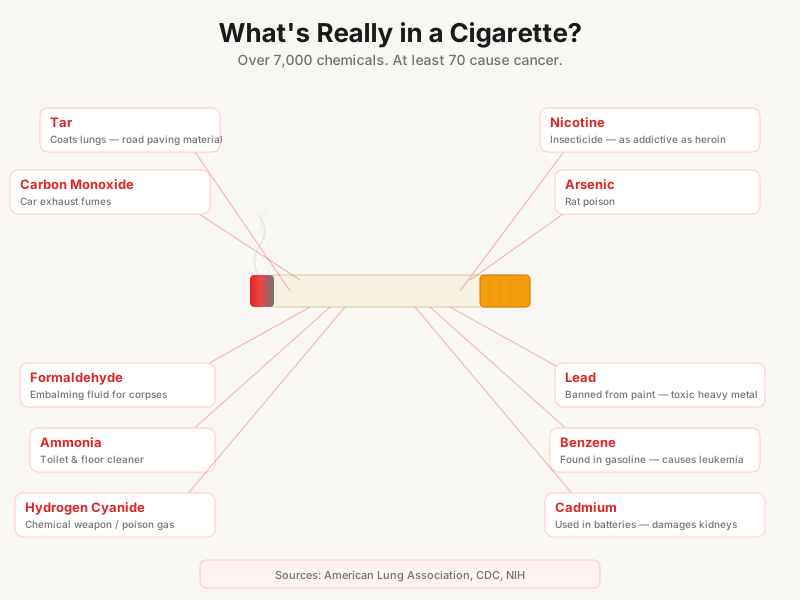 What’s really in a cigarette — Sources: American Lung Association; CDC; National Cancer Institute
Harmala Alkaloids (MAO Inhibitors)
This is arguably the most underappreciated factor in tobacco addiction. Tobacco smoke contains compounds, including harman and norharman, that inhibit monoamine oxidase (MAO), the enzyme responsible for breaking down dopamine, serotonin, and norepinephrine.
PET imaging studies by Fowler et al. (1996, 2003) at Brookhaven National Laboratory showed that active smokers have:
- Approximately 40% lower MAO-A activity compared to non-smokers
- Approximately 30% lower MAO-B activity compared to non-smokers
- These reductions are measurable within hours of regular smoking and persist throughout the day between cigarettes
When MAO is inhibited, dopamine released by nicotine lingers in the synapse much longer, amplifying and prolonging the reward signal. The compound effect works like this:
- Nicotine triggers dopamine release
- MAO inhibition prevents that dopamine from breaking down
- Result: a stronger, longer-lasting reward signal than nicotine alone could ever produce
This is strong evidence for why cigarettes are more addictive than other nicotine delivery systems. Pure nicotine products like nicotine patches, gum, or lozenges don’t contain MAO inhibitors. That’s likely a significant reason why NRT products have very low abuse potential.
Acetaldehyde
Acetaldehyde, a combustion product in cigarette smoke, has been shown to synergistically enhance nicotine’s rewarding effects in animal studies (Belluzzi et al., 2005, Neuropsychopharmacology). It may also inhibit MAO independently, adding another layer to the cigarette-specific addiction profile.
Menthol
In menthol cigarettes, the cooling effect anaesthetizes the airways, allowing deeper inhalation and greater nicotine absorption per puff. Menthol also inhibits nicotine metabolism, leading to higher nicotine levels per cigarette smoked. Research published in Tobacco Control found that menthol cigarette smokers have lower quit rates and may develop dependence more rapidly than non-menthol smokers.
The Development of Addiction: A Timeline
Addiction doesn’t happen overnight, but it happens faster than most people realize.
The Hooked on Nicotine Checklist (HONC)
Pioneering research by DiFranza et al. (2002) published in Tobacco Control tracked adolescent smokers and found that symptoms of nicotine dependence, including craving, difficulty not smoking in certain situations, and irritability when unable to smoke, appeared in some individuals within days of their first cigarette, often before they were smoking daily.
The study challenged the long-held assumption that addiction requires prolonged, heavy use. In some susceptible individuals, the neurochemical cascade described above begins reshaping the brain from the very first exposures.
Typical Progression
While individual variation is significant, a common addiction trajectory looks like this:
- First exposure: Nausea, dizziness (nicotine is a toxin at high doses), possibly mild euphoria
- Experimentation (days to weeks): Tolerance to aversive effects develops; pleasurable effects become more prominent
- Regular use (weeks to months): Receptor upregulation begins; baseline shifts; smoking becomes tightly associated with specific situations and routines
- Dependent use (months): Physical withdrawal upon cessation; compulsive use despite desire to stop; loss of control over consumption patterns
- Entrenched addiction (years): Deeply ingrained habit loops; identity integration (“I’m a smoker”); multiple failed quit attempts
Why Understanding This Matters for Quitting
Every piece of science in this article has a practical implication for cessation.
The Speed Problem
Since rapid delivery is what makes nicotine so addictive, slowing the delivery is protective. This is why NRT works. A nicotine patch delivers nicotine over hours instead of seconds, dramatically reducing its addictive reinforcement while still managing withdrawal symptoms.
The Receptor Problem
Since upregulated receptors drive withdrawal severity, tapering nicotine gradually via patch step-down programs allows receptors to downregulate at a manageable pace rather than forcing a sudden, severe adjustment. The full withdrawal timeline is more predictable when you manage the receptor problem systematically.
The MAO Problem
Since MAO inhibition amplifies cigarette addiction beyond pure nicotine effects, switching from cigarettes to NRT before quitting nicotine entirely may ease the process. You remove the MAO inhibition component while maintaining enough nicotine to prevent severe withdrawal.
The Genetic Problem
Since genetic variation affects metabolism and receptor sensitivity, one-size-fits-all cessation treatment is genuinely not adequate for everyone. Research is moving toward pharmacogenomic approaches, matching cessation medications to an individual’s genetic profile. Fast metabolizers may respond better to varenicline; slow metabolizers may do well with lower-dose NRT.
The Habit Problem
Since behavioral conditioning is independent of neurochemistry, medication alone is insufficient for most people. Combining pharmacotherapy with behavioral counseling consistently produces the highest quit rates, addressing both the neurochemical and learned components of addiction at the same time.
The Recovery Timeline
Your brain is remarkably plastic. Given time without nicotine:
- Weeks 1-2: Acute withdrawal symptoms peak and begin to ease. Cravings are most intense but each one still only lasts 3-5 minutes
- Weeks 6-12: PET imaging research by Cosgrove et al. (2009) in Archives of General Psychiatry showed α4β2 nAChR availability returning toward near-normal levels within this window
- Months 3-6: Receptor density continues normalizing. Most former smokers report cravings becoming noticeably less frequent and intense by the 3-month mark
- Months 6-12: Dopamine baseline largely recovers. The mood improvements from quitting become more stable and self-sustaining
- 1+ years: Brain structure continues normalizing. The extra hardware your brain built for nicotine gradually repurposes itself for other functions
Your brain built this trap. But your brain can also dismantle it, given time, strategy, and a clear understanding of what you’re actually up against.
Sources and Further Reading
- National Institute on Drug Abuse. “Tobacco, Nicotine, and E-Cigarettes Research Report.”
- Breese CR et al. (1997). “Effect of smoking history on [3H]nicotine binding in human postmortem brain.” Journal of Pharmacology and Experimental Therapeutics.
- Di Chiara G. (2000). “Role of dopamine in the behavioural actions of nicotine related to addiction.” European Journal of Pharmacology.
- Fowler JS et al. (1996, 2003). “Brain monoamine oxidase A inhibition in cigarette smokers.” Brookhaven National Laboratory / PNAS.
- Lerman C et al. (2006). “Pharmacogenetic investigation of smoking cessation treatment.” Clinical Pharmacology & Therapeutics.
- Thorgeirsson TE et al. (2008). “A variant associated with nicotine dependence, lung cancer and peripheral arterial disease.” Nature.
- Li MD et al. (2003). “The genetics of smoking-related behavior: a brief review.” Human Molecular Genetics.
- DiFranza JR et al. (2002). “Initial symptoms of nicotine dependence in adolescents.” Tobacco Control.
- Cosgrove KP et al. (2009). “Evolving knowledge of sex differences in brain structure, function, and chemistry.” Archives of General Psychiatry.