What Happens to Your Body When You Quit Smoking
Medical Disclaimer
This article is for informational purposes only and does not constitute medical advice. Always consult a healthcare professional before making changes to your health routine. If you're experiencing a medical emergency, call 911 or your local emergency number.
Read our full medical disclaimer →Here’s something that might change the way you think about quitting: your body starts repairing itself within 20 minutes of your last cigarette. Not 20 days. Not 20 weeks. Twenty minutes. Before you’ve even finished feeling the craving for the next one, your cardiovascular system has already started recalibrating.
The human body is an astonishingly resilient machine. It has been dealing with the roughly 7,000 chemicals in each puff of cigarette smoke — at least 70 of which are known carcinogens — and the moment you stop flooding it with those toxins, it gets to work. What follows is a recovery timeline backed by data from the American Cancer Society, the Centers for Disease Control and Prevention, the World Health Organization, and decades of longitudinal research.
Think of this timeline as a progress bar. Every milestone you hit is permanent, banked, irreversible. Your body is keeping score, and the score only goes up.
20 Minutes: The First Measurable Change
Within 20 minutes of your last cigarette, your heart rate and blood pressure begin to drop toward normal levels. Nicotine is a stimulant that activates your sympathetic nervous system — the “fight or flight” response. Every cigarette elevated your heart rate by 10-20 beats per minute and constricted your blood vessels.
Remove the nicotine, and your cardiovascular system immediately starts to recalibrate. Your heart doesn’t need to pump as hard. The blood vessels in your hands and feet begin to dilate, which is why some people notice their fingers feeling warmer within the first hour.
This isn’t trivial. That elevated heart rate and blood pressure, sustained over years, is one of the primary mechanisms by which smoking causes heart attacks and strokes. The meter starts running backward almost immediately.
8-12 Hours: Carbon Monoxide Clears
This one is fascinating. Carbon monoxide (CO) is one of the gases in cigarette smoke, and it binds to hemoglobin — the molecule in your red blood cells that carries oxygen — with roughly 200 times the affinity of oxygen. That means when CO is present, it aggressively elbows oxygen out of the way.
A typical smoker’s blood carbon monoxide level is 3-12%, compared to under 1% in non-smokers. That means up to 12% of your blood’s oxygen-carrying capacity has been hijacked by a toxic gas.
Within 8-12 hours of your last cigarette, carbon monoxide levels in your blood drop to normal. Your hemoglobin is freed up. Oxygen levels rise. Your tissues — your heart, your brain, your muscles — are getting more oxygen with every heartbeat than they have in however long you’ve been smoking.
What This Means For You: If you quit smoking tonight before bed, by the time you wake up tomorrow, your blood is carrying significantly more oxygen. That’s why many people report feeling slightly more clear-headed as early as the next morning.
24 Hours: Heart Attack Risk Begins to Drop
Within a single day, your risk of heart attack begins to decrease. Smoking increases heart attack risk through multiple mechanisms: it raises blood pressure, accelerates atherosclerosis (plaque buildup in arteries), makes blood more likely to clot, and reduces oxygen delivery to the heart muscle.
At 24 hours, your blood pressure is normalizing, carbon monoxide is gone, and your blood’s clotting tendency has already begun to shift. According to the American Heart Association, this reduction in cardiac risk is measurable and significant within the first day.
Smoking is responsible for roughly 1 in 4 cardiovascular disease deaths in the United States, according to the CDC. That risk begins to reverse on day one.
48 Hours: Nerve Endings and Senses Reawaken
Here’s a milestone that most people can actually feel. Within 48 hours, damaged nerve endings begin to regrow. The toxic chemicals in cigarette smoke damage the delicate nerve endings responsible for smell and taste, and without continued exposure, those nerves start repairing themselves almost immediately.
Many people report that by day 2 or 3, food tastes richer and more complex. They can smell things they hadn’t noticed in years — fresh-cut grass, coffee brewing, even subtle scents like clean laundry.
This happens because the olfactory nerve endings in your nasal passages and the taste receptors on your tongue were being chronically damaged and numbed by the hot, chemical-laden smoke passing over them multiple times a day. Remove the insult, and regeneration begins.
Also at 48 hours: nicotine is essentially eliminated from your body. The half-life of nicotine is about 2 hours, and within 48 hours, it and its primary metabolite cotinine are largely cleared. Your body is now running on its own neurochemistry.
2 Weeks to 3 Months: Circulation and Lung Function Surge
This is where the changes become dramatic and unmistakable.
Circulation Overhaul
Your circulatory system undergoes a remarkable transformation during this period. Blood flow improves throughout your body as blood vessels regain their elasticity and responsiveness. Peripheral circulation — the blood flow to your extremities — improves significantly. Your skin may look healthier. Wounds heal faster. Exercise becomes notably easier.
Lung Function Improvement
Your lung function increases by up to 30% during this 2-12 week window, according to the American Lung Association. Here’s what’s happening inside your lungs:
- Cilia are regrowing. These tiny hair-like structures line your airways and act like escalators, continuously sweeping mucus, debris, and pathogens up and out of your lungs. Cigarette smoke paralyzes and destroys cilia. Within 2 weeks of quitting, they start regenerating. Within 1-9 months, they’re functioning effectively again.
- Mucus production is normalizing. You may actually cough more during this phase — the “smoker’s cough” may temporarily worsen. This is counterintuitive but it’s a sign of healing: your lungs are clearing out the accumulated tar and debris that was trapped while your cilia were disabled.
- Bronchial tubes are relaxing. The chronic inflammation in your airways begins to subside, and the smooth muscle around your bronchial tubes loosens.
What This Means For You: If you’ve been avoiding stairs or getting winded during moderate activity, this is the phase where you’ll start noticing real change. Walking farther, breathing easier, recovering faster from exertion — these improvements are consistent and progressive.
1-9 Months: The Deep Cleaning
Month 1-3
Your cough, sinus congestion, and shortness of breath are decreasing measurably. Your lungs are in active recovery mode. The cilia that are now functional again are doing their job — sweeping out years of accumulated damage.
Your overall energy level increases. This is partly cardiovascular (better circulation, more oxygen), partly pulmonary (more efficient gas exchange in the lungs), and partly neurological (your brain is no longer cycling through nicotine withdrawal multiple times per day).
Months 3-9
The deep cleaning continues. Your lungs’ ability to fight infection improves dramatically because the cilia and mucus-based defense system is functional again. According to CDC data, the risk of respiratory infections (colds, bronchitis, pneumonia) decreases significantly during this period.
Your body’s inflammatory markers are declining. Smoking triggers systemic inflammation — elevated C-reactive protein, white blood cell counts, and fibrinogen levels — that affects every organ. These markers are normalizing.
Sinus congestion, fatigue, and shortness of breath have largely resolved by the 9-month mark for most people.
1 Year: The Cardiac Milestone
This is a major landmark: your risk of coronary heart disease is now approximately 50% lower than a current smoker’s. The American Heart Association marks this as one of the most significant health milestones in the cessation timeline.
Here’s how that 50% reduction breaks down biologically:
- Atherosclerosis progression has slowed dramatically. Smoking accelerates plaque buildup; without smoke exposure, the process decelerates and in some cases partially reverses.
- Blood vessel function has improved. Endothelial function — the ability of your blood vessel linings to dilate and constrict appropriately — is significantly restored.
- Blood clotting factors have normalized. Smoking makes blood “stickier” and more prone to forming dangerous clots. This effect reverses over the first year.
- Chronic inflammation has decreased. Inflammatory chemicals that erode arterial walls and destabilize plaques have subsided.
For context: smoking causes approximately 480,000 deaths per year in the United States, and heart disease is the number one killer among them. Cutting that risk in half within a year is one of the most impactful things you can do for your longevity.
5 Years: Stroke Risk Plummets
Between 5 and 15 years after quitting (depending on how much and how long you smoked), your stroke risk drops to that of a non-smoker. Some studies suggest this happens as early as 2-5 years for lighter smokers.
Stroke is caused by either a blockage or a rupture of blood vessels supplying the brain. Smoking increases stroke risk by 2-4 times through the same mechanisms that damage the heart: atherosclerosis, hypertension, increased clotting, and chronic inflammation. As all of these reverse, stroke risk falls accordingly.
At the 5-year mark, your risk of cancers of the mouth, throat, esophagus, and bladder is also reduced by approximately 50% compared to when you smoked, according to the National Cancer Institute.
10 Years: Cancer Risk in Retreat
A decade after quitting, your risk of dying from lung cancer drops to about half that of a current smoker. This is remarkable given that lung cancer is the deadliest cancer in the world and smoking causes approximately 80-90% of all lung cancer cases.
Here’s what the research shows:
- Precancerous cells are being replaced. Your body continuously replaces damaged cells with healthy ones. After a decade without carcinogenic exposure, many of the genetically damaged cells in your lungs have been replaced by normal, healthy tissue.
- DNA repair mechanisms have been working. Your cells have enzymes that repair the kind of DNA damage caused by tobacco carcinogens. Given enough time without new damage, these repair systems catch up.
- Risk of pancreatic cancer also drops — approaching that of a non-smoker at the 10-year mark, according to the American Cancer Society.
The risk of cancers of the larynx (voice box) and kidney also continues to decline during this period.
The Bottom Line: Cancer is a numbers game played out over decades. Every year without tobacco exposure shifts the odds significantly in your favor. The 10-year mark represents a major inflection point in cancer risk reduction.
15 Years: Heart Disease Risk Returns to Baseline
Fifteen years after quitting, your risk of coronary heart disease is essentially the same as someone who never smoked. Your body has fully recovered from the cardiovascular damage of smoking.
This is one of the most encouraging statistics in all of cessation medicine: complete cardiovascular recovery is not just possible — it’s the expected outcome if you stay smoke-free. The heart and blood vessels are remarkably capable of remodeling and repair when the toxic insult is removed.
The Complete Recovery Timeline at a Glance
| Timeframe | What Happens |
|---|---|
| 20 minutes | Heart rate and blood pressure drop |
| 8-12 hours | Carbon monoxide levels normalize; oxygen levels rise |
| 24 hours | Heart attack risk begins to drop |
| 48 hours | Nerve endings start regrowing; smell and taste improve |
| 2 weeks - 3 months | Circulation improves; lung function increases up to 30% |
| 1-9 months | Cilia regrow; coughing and shortness of breath decrease |
| 1 year | Heart disease risk drops by 50% |
| 5 years | Stroke risk drops to that of a non-smoker |
| 10 years | Lung cancer death risk drops by 50%; other cancers decrease |
| 15 years | Heart disease risk equals that of a non-smoker |
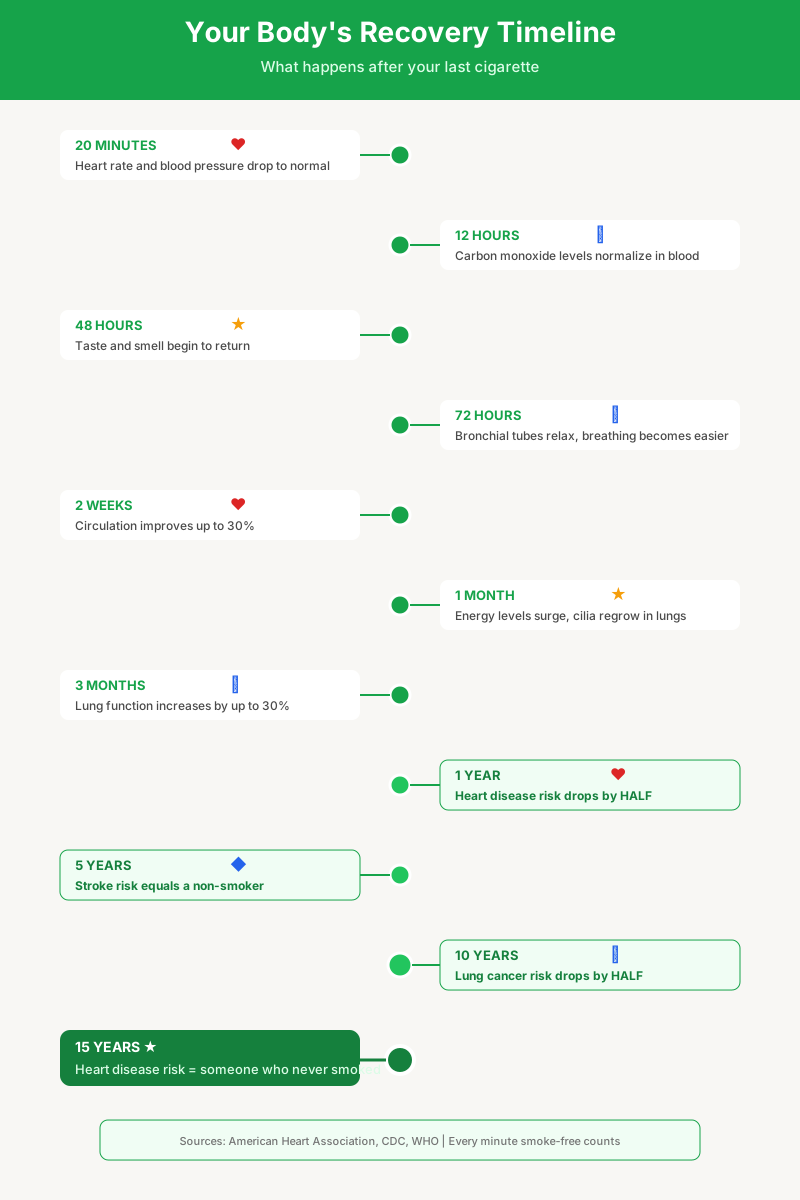 Quit smoking recovery timeline — Sources: American Cancer Society; CDC Surgeon General’s Report, 2020
What About Long-Term Smokers?
A common question — and fear — is whether this timeline applies if you’ve smoked for 20, 30, or 40 years. The evidence is reassuring.
A landmark study published in the New England Journal of Medicine in 2013 (Jha et al.) followed over 200,000 people and found that quitting at any age significantly increased life expectancy:
- Quitting before age 40 avoided more than 90% of the excess mortality caused by smoking
- Quitting before age 50 reduced excess risk by more than two-thirds
- Quitting before age 60 still added approximately 4 years of life expectancy
- Even quitting after age 60 provided measurable benefits and increased survival
The study’s conclusion was unequivocal: it is never too late to benefit from quitting.
Some damage from very long-term heavy smoking may not fully reverse — emphysema involves structural destruction of alveoli (the tiny air sacs in the lungs) that the body cannot regrow. But even in these cases, quitting stops the progression, improves remaining lung function, and dramatically reduces heart disease and cancer risk.
Your Body Is Already Healing
If you’ve just put out your last cigarette, here’s what you need to know: the machinery of healing is already in motion. Before you finish reading this article, your heart rate has begun to normalize and your blood pressure is dropping. By tomorrow, your blood will be carrying more oxygen than it has in however long you’ve been smoking.
Every hour, every day, every week that you stay smoke-free, your body banks another gain. These gains are cumulative, progressive, and permanent. The 15-year timeline might seem long, but here’s the thing most people miss: you don’t have to wait 15 years to feel different. Most people notice meaningful improvements in energy, breathing, and how food tastes within the first two weeks.
Your body has been fighting tobacco’s damage every day you’ve been smoking. Now you’re finally on the same side.
Sources and Further Reading
- American Cancer Society. “Benefits of Quitting Smoking Over Time.”
- Centers for Disease Control and Prevention. “Smoking Cessation: A Report of the Surgeon General (2020).”
- American Heart Association. “Why Quit Smoking?”
- American Lung Association. “Benefits of Quitting.”
- Jha, P., et al. (2013). “21st-Century Hazards of Smoking and Benefits of Cessation in the United States.” New England Journal of Medicine, 368(4), 341-350.
- World Health Organization. “Tobacco: Key Facts.”
- National Cancer Institute. “Harms of Cigarette Smoking and Health Benefits of Quitting.”
- U.S. Surgeon General. “The Health Consequences of Smoking — 50 Years of Progress (2014).”