Quit Smoking Success Rates by Method
Medical Disclaimer
This article is for informational purposes only and does not constitute medical advice. Always consult a healthcare professional before making changes to your health routine. If you're experiencing a medical emergency, call 911 or your local emergency number.
Read our full medical disclaimer →Disclosure: Some links in this article may be affiliate links. We may earn a small commission if you make a purchase, at no extra cost to you. This helps support our mission to provide free quit-smoking resources.
Quitting smoking has a measurement problem. Ask ten studies what the “success rate” of any given method is, and you’ll get ten different answers, because they’re measuring different things. How long does someone need to stay quit to count? Is “not a single puff” the standard, or does “significantly reduced smoking” qualify? Are we looking at 4 weeks, 6 months, or 12 months?
These aren’t pedantic questions. They’re the reason why the numbers you see cited for different quit methods vary so wildly. A method that claims “60% success” at 4 weeks may show only 15% success at 12 months. Both numbers are technically correct. Neither is dishonest. But only one of them is useful if your goal is to actually quit for good.
Every number cited here specifies the timeframe and the standard used. The primary sources are Cochrane systematic reviews and major randomized controlled trials published in peer-reviewed journals.
Before the Numbers: Understanding “Success”
The Measurement Problem
Clinical trials typically define success as continuous abstinence (not a single puff) or point prevalence abstinence (not smoking at the time of measurement, regardless of any lapses in between). These give different numbers. Continuous abstinence is harder to achieve and produces lower reported rates; point prevalence looks better on paper but can mask people who lapsed and re-quit.
For consistency, we’ll focus primarily on biochemically verified continuous abstinence at 6-12 months, which is the most meaningful measure for long-term quitting.
The Denominator Problem
Success rates also depend on who’s being counted. Rates from clinical trials (motivated volunteers who signed up for a study) are typically higher than real-world rates (everyone who tries to quit, including half-hearted attempts). Where possible, we’ll note this distinction.
The Bottom Line: When comparing methods, always check: What timeframe? What definition of “quit”? Verified or self-reported? Clinical trial or real-world? The method comparisons below standardize these variables as much as the data allows.
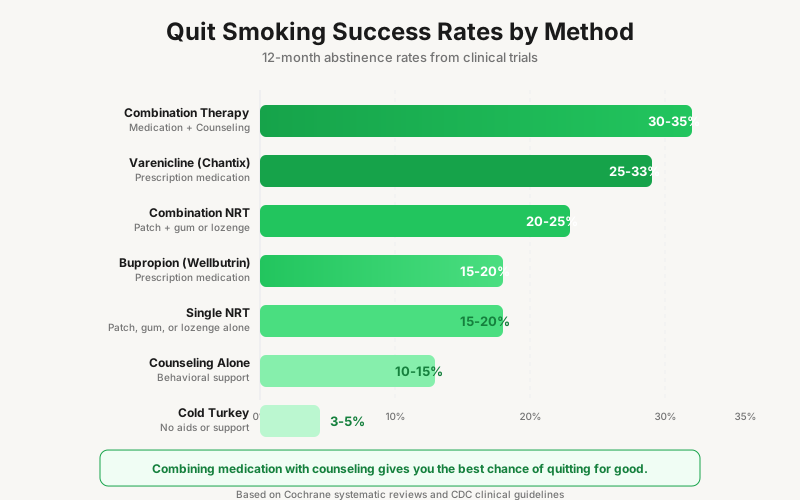 Quit smoking success rates by method (6-12 month abstinence) — Sources: Cochrane Database of Systematic Reviews; EAGLES Trial, The Lancet, 2016
Method 1: Cold Turkey (Unassisted)
The Data
Cold turkey means quitting abruptly without medications, nicotine replacement, or formal support. It’s the most common quit method. Approximately 60-70% of quit attempts are made this way, according to CDC survey data.
The success rates are sobering. A meta-analysis by Hughes et al. (2004) in Addiction pooled data from multiple studies and estimated the unassisted long-term quit rate at approximately 3-5% at 12 months.
Why It’s So Low
This isn’t because people who try cold turkey lack willpower. They’re facing the full neurochemical onslaught of nicotine withdrawal — receptor upregulation, dopamine deficit, and the complete catalog of withdrawal symptoms — with no pharmacological buffer. They’re also typically not receiving behavioral support for managing triggers and habit loops.
The Important Nuance
Despite the low per-attempt success rate, cold turkey has produced the largest total number of successful ex-smokers, simply because so many people try it. If you try cold turkey 20 times, your cumulative probability of eventual success is considerably higher than 3-5%. Most long-term ex-smokers in population surveys report having quit cold turkey, but many of them tried multiple times before it stuck.
Method 2: Nicotine Replacement Therapy (NRT) — Single Product
Nicotine replacement therapy products include patches, gum, lozenges, inhalers, and nasal spray. They deliver controlled doses of nicotine without the combustion products, MAO inhibitors, and other harmful chemicals in cigarette smoke.
The Data
The Cochrane Review of NRT (Hartmann-Boyce et al., 2018), which analyzed 136 trials involving over 64,000 participants, found an overall relative risk of 1.55 (95% CI: 1.49 to 1.61) for NRT vs. placebo. That translates to roughly 15-20% continuous abstinence at 12 months compared to about 10% for placebo — effectively doubling your odds.
By Product Type
| NRT Product | Relative Risk vs. Placebo | Notes |
|---|---|---|
| Patch (16hr or 24hr) | 1.51 | Steady delivery; easiest to use; no behavioral replacement |
| Gum (2mg or 4mg) | 1.49 | Oral replacement; can dose on demand; 4mg more effective for heavy smokers |
| Lozenge | 1.52 | Similar to gum; dissolves without chewing |
| Inhaler | 1.90 | Mimics hand-to-mouth ritual; prescription in most countries |
| Nasal Spray | 2.02 | Fastest NRT delivery (still much slower than cigarettes); highest user-reported satisfaction |
Why NRT Works But Isn’t Magic
NRT reduces withdrawal severity by maintaining partial nicotinic receptor activation. It doesn’t eliminate cravings, but it takes the sharp edge off, making the first weeks more manageable. However, it doesn’t address the behavioral component of addiction — the habit loops, the triggers, the rituals — which is why NRT alone has modest effects and why combining it with behavioral support significantly improves outcomes.
Method 3: Combination NRT
The Data
Using two NRT products simultaneously — typically a patch (for sustained baseline nicotine) plus a short-acting product like gum, lozenge, or inhaler (for acute craving management) — produces meaningfully better results than any single NRT product.
The Cochrane Review found combination NRT beat single-product NRT with a relative risk of 1.25 (95% CI: 1.15 to 1.36). That translates to roughly 20-25% abstinence at 12 months, about a 25% improvement over any single product alone.
Why Combination Works Better
The patch provides a steady nicotine baseline, preventing the worst withdrawal symptoms. The short-acting product gives you a tool for acute cravings — the moments when you’d normally reach for a cigarette. Together, they address both the tonic (constant) and phasic (acute) components of nicotine dependence.
The Bottom Line: If you’re going to use NRT, use two products. The patch alone is good. Patch plus gum or lozenge is meaningfully better. This is one of the most well-supported findings in cessation medicine.
Method 4: Varenicline (Champix/Chantix)
Varenicline is a prescription medication that works directly at the nicotinic receptor level. It’s a partial agonist at the α4β2 nAChR, meaning it partially activates the receptor (enough to reduce withdrawal and cravings) while simultaneously blocking nicotine from fully activating it (reducing the reward if you do smoke). See our full Chantix guide for dosing specifics.
The Data
Varenicline is the most effective single-agent pharmacotherapy for smoking cessation. The Cochrane Review (Cahill et al., 2016), covering 27 trials, found a relative risk vs. placebo of 2.24 (95% CI: 2.06 to 2.43). Twelve-month quit rates fall at roughly 25-33% in clinical trials. Varenicline also outperformed bupropion head-to-head (RR 1.39) and single-agent NRT (RR 1.25).
Safety Profile
Early post-marketing reports raised concerns about psychiatric side effects (depression, suicidal ideation), and the FDA issued a black box warning in 2009. The EAGLES trial (Anthenelli et al., The Lancet, 2016), which enrolled 8,144 smokers across psychiatric and non-psychiatric cohorts, directly tested this. It found no statistically significant increase in serious neuropsychiatric adverse events for varenicline vs. placebo in either group. The FDA removed the black box psychiatric warning in 2016. The side effects that remain: nausea in roughly 30% of users (usually mild and temporary), vivid dreams, and sleep disruption in some people.
Method 5: Bupropion (Wellbutrin/Zyban)
Bupropion is an atypical antidepressant that inhibits the reuptake of dopamine and norepinephrine. It was originally developed for depression; the smoking-reduction effect was discovered as a side effect. Full details on dosing and what to expect are in the Wellbutrin for smoking cessation guide.
The Data
The Cochrane Review (Hughes et al., 2014), covering 46 trials, found bupropion roughly doubled quit rates vs. placebo: RR 1.69 (95% CI: 1.53 to 1.85). Twelve-month abstinence rates land at roughly 15-20%, comparable to single-agent NRT.
How It Works
Bupropion addresses the dopamine deficit component of nicotine withdrawal. By blocking dopamine and norepinephrine reuptake, it partially compensates for the reduced dopamine signaling that occurs when nicotine is removed. It also has mild antagonist effects at nicotinic receptors, which may reduce the reward from smoking if someone slips.
Who It May Suit
People with a history of depression or low mood during previous quit attempts often respond well to bupropion. It’s also useful when varenicline isn’t tolerated or covered by insurance. Bupropion lowers the seizure threshold, so it’s contraindicated for people with seizure disorders, eating disorders, or those currently taking MAOIs.
Method 6: Behavioral Counseling (Alone)
The Data
Professional behavioral counseling — individual, group, or telephone-based — helps people identify triggers, develop coping strategies, and build motivation. The Cochrane Review on individual behavioral counseling (Lancaster & Stead, 2017) found an RR of 1.57 vs. minimal contact. Group therapy shows RR up to 1.98 vs. self-help materials. Telephone quitlines land around RR 1.37 (Stead et al., 2013). As a standalone treatment without medication, real-world quit rates fall around 7-13% at 6 months.
Types of Behavioral Support
| Type | Description | Evidence Level |
|---|---|---|
| Individual counseling | 1-on-1 with a trained cessation specialist | Strong |
| Group therapy | Structured group sessions, often 6-8 weeks | Strong |
| Telephone quitlines | Proactive callbacks from trained counselors | Strong |
| Text-based programs | Scheduled text messages with tips and encouragement | Moderate |
| Mobile apps | Self-guided programs with tracking and tips | Limited but growing |
| Online communities | Peer support through forums and social media | Limited formal evidence; strong anecdotal support |
Why Counseling Works
Counseling addresses the behavioral and psychological components of addiction that medication cannot reach. It helps with identifying and managing triggers (stress, alcohol, post-meal habits, social situations), breaking automatic habit loops that run on autopilot, and building relapse prevention skills before a slip turns into a full return to smoking. Medication handles the chemistry; counseling handles everything else.
Method 7: Combination Therapy (Medication + Counseling)
This is the gold standard. Every major clinical guideline — from the US Public Health Service to the UK’s NICE — recommends combining pharmacotherapy with behavioral support.
The Data
The Cochrane Review by Stead et al. (2016) on combined pharmacotherapy and behavioral interventions found an RR of 1.83 (95% CI: 1.68 to 2.00) for combination therapy vs. a single type of intervention alone. Six to twelve-month quit rates in combination trials consistently run 25-35%, roughly 6-10 times the cold turkey baseline.
Why Combination Dominates
This makes intuitive sense once you understand the dual nature of smoking addiction. Physical dependence — receptor upregulation, dopamine deficit, withdrawal symptoms — is addressed by medication. Behavioral and psychological dependence — habit loops, triggers, emotional associations, ritualized use — is addressed by counseling. Neither alone covers the full picture. Together, they do.
The combination provides a clear, clinically significant benefit over either approach alone — consistent finding across hundreds of clinical trials.
The Bottom Line: If you’re serious about maximizing your odds, combination therapy (medication + counseling) is what the evidence supports. The success rates are 5-10x higher than unassisted cold turkey. This isn’t opinion — it’s the consistent finding across hundreds of clinical trials.
Head-to-Head Comparison: The Summary Table
| Method | 6-12 Month Quit Rate | Relative Effectiveness | NNT |
|---|---|---|---|
| Cold turkey (unassisted) | 3-5% | Baseline | N/A |
| Single NRT (patch, gum, etc.) | 15-20% | 3-4x cold turkey | ~14 |
| Combination NRT (patch + short-acting) | 20-25% | 5-6x cold turkey | ~10 |
| Bupropion | 15-20% | 3-4x cold turkey | ~11 |
| Varenicline | 25-33% | 6-8x cold turkey | ~8 |
| Behavioral counseling alone | 7-13% | 2-3x cold turkey | ~15 |
| Medication + counseling | 25-35% | 6-10x cold turkey | ~5-7 |
Note: Approximate ranges based on multiple Cochrane reviews and major clinical trials. Actual rates vary by study, population, and measurement criteria.
The Number Needed to Treat: What It Means In Practice
The “Number Needed to Treat” (NNT) tells you how many people need to receive a treatment for one additional person to benefit compared to the control group. For context, many widely accepted medical treatments have NNTs of 20-100. An NNT of 5-7 is remarkably effective by medical standards. Varenicline at NNT ~8 and combination therapy at NNT ~5-7 are among the more favorable NNTs in all of preventive medicine.
Why “Success Rates” Vary So Wildly in Popular Media
If you’ve searched online for quit rates and found contradictory numbers, here’s why.
Study Design Differences
Open-label trials, where both participants and researchers know who gets the active treatment, tend to show stronger effects than blinded trials. Industry-sponsored trials often recruit more motivated participants and provide more intensive support in the active arm. Some studies allow concurrent NRT or counseling in the “control” condition, which inflates the baseline and shrinks the apparent treatment effect.
Timeframe Differences
A method showing 40-50% success at 4 weeks often drops to 15-20% by 12 months. Many popular health websites cite 4-week data because it sounds more impressive. The 12-month number is what matters if the goal is to stay quit.
Verification Differences
Self-reported quit rates run consistently 20-30% higher than biochemically verified rates (via carbon monoxide breath test or urinary cotinine). Studies relying on self-report alone will look better on paper. Studies requiring biochemical verification are more conservative, and more accurate.
Population Differences
Clinical trial participants volunteer, often receive free medication, and get frequent check-ins and substantial support that the average person doesn’t get from a 10-minute doctor visit. Real-world data from pharmacy records, health surveys, and insurance claims consistently shows lower quit rates than clinical trials for every method.
What the Data Says About Relapse
Understanding relapse patterns matters because quitting isn’t a single event — it’s a process that often involves setbacks.
About 80% of people who make a serious quit attempt will relapse at least once. Most relapses happen in the first three months, when withdrawal intensity and cue reactivity are highest. By 12 months, quit rates stabilize — people who clear the 12-month mark have significantly improved long-term odds.
The data also shows that a lapse (one cigarette) doesn’t have to become a relapse (return to smoking). Studies by Shiffman et al. (2006) in Journal of Consulting and Clinical Psychology found that approximately 50% of people who have a single lapse do not go on to relapse fully, especially if they have a plan for how to respond to a slip. Having that plan in advance is one concrete thing counseling can provide.
Practical Recommendations Based on the Evidence
For the Best Odds
- Talk to a healthcare provider about medication options (varenicline, combination NRT, or bupropion). The Chantix vs NRT comparison can help you think through which fits your situation.
- Pair medication with behavioral support — call a quitline (1-800-QUIT-NOW in the US), join a cessation group, or see a counselor trained in cessation.
- Set a quit date 1-2 weeks in advance and begin medication before that date. Varenicline is typically started 1 week before the quit date; combination NRT can start on the quit date itself.
If You Prefer Not to Use Medication
- Use a quitline or counseling — it still roughly doubles your odds vs. going completely alone.
- Create a detailed trigger plan — list your top 10 smoking triggers and write a specific alternative behavior for each one before your quit date.
- Enlist social support — having a quit buddy or telling friends and family improves outcomes in multiple studies.
If You’ve Tried and Failed Before
- Try a different method — if cold turkey didn’t work, try medication. If a patch didn’t work, try varenicline. Each method works through different mechanisms; what failed before isn’t evidence that nothing will work.
- Don’t count previous attempts as failures — they’re data. Each attempt increases your familiarity with your own triggers and what you’ll need to address.
- Consider combination therapy — if you’ve been trying one thing at a time, combining approaches may provide the edge you need.
The evidence is clear: effective treatments exist, they dramatically improve your odds, and combining approaches works best. The playing field isn’t level when you bring the right tools.
Sources and Further Reading
- Centers for Disease Control and Prevention. “Quitting Smoking Among Adults — United States, 2000-2015.”
- Hartmann-Boyce J, et al. “Nicotine replacement therapy versus control for smoking cessation.” Cochrane Database of Systematic Reviews, 2018.
- Cahill K, et al. “Pharmacological interventions for smoking cessation: an overview and network meta-analysis.” Cochrane Database of Systematic Reviews, 2016.
- Hughes JR, et al. “Antidepressants for smoking cessation.” Cochrane Database of Systematic Reviews, 2014.
- Stead LF, et al. “Combined pharmacotherapy and behavioural interventions for smoking cessation.” Cochrane Database of Systematic Reviews, 2016.
- Anthenelli RM, et al. “Neuropsychiatric safety and efficacy of varenicline, bupropion, and nicotine patch in smokers with and without psychiatric disorders (EAGLES).” The Lancet, 2016.
- Shiffman S, et al. “Progression from a smoking lapse to relapse.” Journal of Consulting and Clinical Psychology, 2006.
- Lancaster T, Stead LF. “Individual behavioural counselling for smoking cessation.” Cochrane Database of Systematic Reviews, 2017.