All Quit Smoking Methods Compared
Medical Disclaimer
This article is for informational purposes only and does not constitute medical advice. Always consult a healthcare professional before making changes to your health routine. If you're experiencing a medical emergency, call 911 or your local emergency number.
Read our full medical disclaimer →Disclosure: Some links in this article may be affiliate links. We may earn a small commission if you make a purchase, at no extra cost to you. This helps support our mission to provide free quit-smoking resources.
Every Quit Smoking Method Compared: What Works, What Doesn’t, and What’s Just Marketing
There are more ways to quit smoking than there are excuses not to. The problem isn’t a lack of options — it’s figuring out which ones are backed by real evidence and which ones are backed by wishful thinking.
I’ve broken down every major cessation method below. Each one gets the same treatment: what it is, how well it works, what it costs, and whether the evidence supports it. No favorites. No sponsors. Just data.
The Quick Reference Chart
Before we dive deep, here’s the overview. Success rates shown are approximate 6-12 month abstinence rates based on the best available clinical evidence.
| Method | Success Rate (6-12 mo) | Cost | Evidence Quality |
|---|---|---|---|
| Cold turkey (no support) | 3-5% | Free | Strong (well-studied) |
| Self-help materials only | 3-5% | Free-$30 | Moderate |
| Counseling/quitline alone | 7-10% | Free-$150/session | Strong |
| Nicotine patch alone | 10-15% | $150-300/12 weeks | Strong |
| Nicotine gum alone | 10-15% | $150-250/12 weeks | Strong |
| Nicotine lozenge alone | 10-12% | $150-250/12 weeks | Strong |
| Nicotine inhaler | 10-14% | $300-500/12 weeks (Rx) | Strong |
| Nicotine nasal spray | 12-15% | $400-600/12 weeks (Rx) | Strong |
| Combination NRT (patch + gum) | 15-25% | $250-450/12 weeks | Strong |
| Bupropion (Zyban/Wellbutrin) | 15-20% | $100-400/12 weeks | Strong |
| Varenicline (Chantix) | 20-25% | $400-600/12 weeks | Strong |
| Combination therapy (meds + counseling) | 25-35% | Varies | Strong |
| Allen Carr’s Easyway | ~15-20% (limited data) | $15-200 | Weak-Moderate |
| Hypnosis | Unclear (5-20% claimed) | $75-300/session | Weak |
| Acupuncture | Same as placebo (~5%) | $60-120/session | Moderate (negative) |
| Smartphone apps | 5-10% | Free-$5/mo | Weak-Moderate |
| Support groups | 10-15% (as adjunct) | Free-$20 | Moderate |
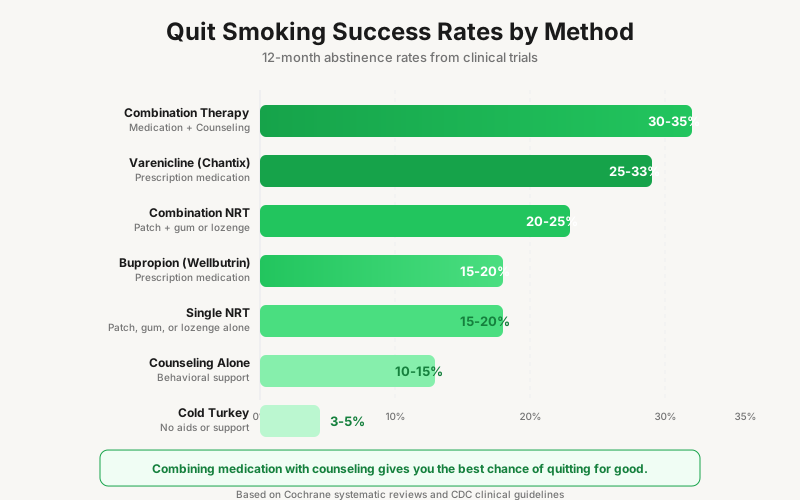 Quit smoking method success rates compared (6-12 month abstinence) — Sources: Cochrane Database of Systematic Reviews; U.S. Clinical Practice Guideline, 2008
Now let’s go deeper.
Tier 1: The Evidence-Based Heavy Hitters
These methods have robust clinical trial data behind them. If your doctor had to bet money on what would work, they’d pick from this list.
Cold Turkey (Unassisted)
What it is: You stop smoking. That’s it. No patches, no pills, no gum, no help.
Success rate: 3-5% at 12 months.
The honest take: Cold turkey is the most popular quit attempt method (about 65-70% of quit attempts, according to the CDC), and it has the worst success rate per attempt. The math is harsh: you’d need to make roughly 20-30 attempts to have a reasonable probability of one sticking.
That said, because so many people try it, cold turkey accounts for the largest total number of ex-smokers. It’s the People’s Method — high volume, low conversion rate.
Best for: Light smokers (<10/day), people with no access to other resources, or extremely motivated individuals with strong support systems.
Cost: Free.
Nicotine Replacement Therapy (NRT)
NRT comes in five FDA-approved forms. All of them work on the same principle: deliver nicotine without the 7,000+ chemicals in cigarette smoke, then gradually taper down.
Nicotine Patch
How it works: Delivers a steady dose of nicotine through your skin over 16 or 24 hours. Typically used in a step-down program (21mg to 14mg to 7mg over 8-12 weeks).
Success rate: About 10-15% at 6-12 months (Cochrane, 2018). Roughly doubles your chances compared to cold turkey.
Pros: Set it and forget it. No constant decision-making. Provides steady baseline nicotine.
Cons: Doesn’t handle acute cravings well (too slow). Skin irritation is common. Vivid dreams if you leave the 24-hour patch on overnight (some people love this, honestly).
Cost: $30-50 per box OTC; about $150-300 for a full course.
Nicotine Gum
How it works: You chew to release nicotine, then “park” it between your cheek and gum to absorb. Available in 2mg and 4mg strengths.
Success rate: 10-15% at 6-12 months. Similar to the patch.
Pros: Handles acute cravings because you control the timing. Keeps your mouth busy (helpful for the oral fixation component).
Cons: Tastes like spicy rubber. Jaw soreness. Many people chew it wrong (you’re supposed to park it, not chew like regular gum). Can cause hiccups, heartburn, and nausea if used incorrectly.
Cost: $40-60 per box OTC; about $150-250 for a full course.
Nicotine Lozenge
How it works: Dissolves slowly in your mouth, releasing nicotine over 20-30 minutes. Available in 2mg and 4mg.
Success rate: 10-12%.
Pros: Discreet. No chewing involved. Good for people who hate gum.
Cons: Hiccups. Heartburn. Mint flavor that some people find nauseating after a while.
Cost: Similar to gum.
Nicotine Inhaler (Prescription)
How it works: A plastic tube that delivers nicotine vapor when you puff on it. Mimics the hand-to-mouth motion of smoking.
Success rate: 10-14%.
Pros: Addresses the behavioral component (hand-to-mouth) better than any other NRT. Many smokers love this feature.
Cons: Prescription required. Expensive. Less effective in cold weather (reduced vapor delivery). Looks like you’re smoking a weird plastic cigarette, which bothers some people.
Cost: $300-500 for a 12-week supply with prescription.
Nicotine Nasal Spray (Prescription)
How it works: Sprayed in the nose. Fastest nicotine delivery of any NRT — reaches the brain in about 5-10 minutes.
Success rate: 12-15%. Slightly higher than other single NRT products, likely because of faster delivery.
Pros: Fastest-acting NRT. Great for intense acute cravings.
Cons: Nose and throat irritation. Watery eyes. Sneezing. Some people find it genuinely unpleasant. Higher dependency potential than other NRTs. Prescription required.
Cost: $400-600 for a 12-week supply.
Combination NRT (The Real Move)
What it is: Using a long-acting NRT (patch) as a baseline PLUS a short-acting NRT (gum, lozenge, inhaler, or spray) for breakthrough cravings.
Success rate: 15-25%. This is significantly better than any single NRT product.
The honest take: If you’re going to use NRT, use combination NRT. Single-product NRT is leaving effectiveness on the table. The 2008 U.S. Clinical Practice Guideline specifically recommends combination NRT as superior to single NRT, and multiple Cochrane reviews confirm it. The patch handles your baseline nicotine need; the gum or lozenge handles the spikes.
Cost: $250-450 for 12 weeks.
Varenicline (Chantix/Champix)
What it is: A prescription medication that partially stimulates nicotinic receptors (giving mild nicotine-like effects) while also blocking nicotine from attaching if you do smoke. It makes smoking less satisfying AND reduces withdrawal.
Success rate: 20-25% at 6-12 months. The highest success rate of any single cessation intervention.
The honest take: Varenicline is the most effective single quit-smoking tool we have. The EAGLES trial (2016), the largest smoking cessation trial ever conducted with over 8,000 participants, confirmed its superiority over NRT and bupropion.
Important note: Pfizer voluntarily recalled Chantix in 2021 due to a nitrosamine impurity concern (a potential carcinogen found in some batches). Generic varenicline has since returned to the market from other manufacturers. The recall was about manufacturing quality, not the drug’s effectiveness or core safety profile.
Side effects: Nausea (most common, affects ~30%), vivid dreams, headache. Earlier concerns about psychiatric side effects (depression, suicidal thoughts) were largely laid to rest by the EAGLES trial, which found no significant increase in neuropsychiatric events compared to NRT or placebo.
Cost: $400-600 for 12 weeks without insurance; many insurance plans cover it. Generic versions are cheaper.
Bupropion (Zyban/Wellbutrin)
What it is: An antidepressant that also works for smoking cessation. It reduces cravings and withdrawal symptoms through dopamine and norepinephrine pathways — notably, it doesn’t contain any nicotine.
Success rate: 15-20% at 6-12 months.
The honest take: Bupropion is underrated. It’s been overshadowed by varenicline, but it’s a solid option — especially for people who are also dealing with depression (two birds, one stone). It also tends to reduce post-cessation weight gain, which matters more than people admit.
Side effects: Insomnia, dry mouth, dizziness. Small seizure risk (about 1 in 1,000). Not suitable for people with eating disorders, seizure disorders, or those using MAOIs.
Cost: $100-400 for 12 weeks; widely available as generic.
Behavioral Counseling & Quitlines
What it is: Professional support through individual counseling, group counseling, or phone-based quitlines (1-800-QUIT-NOW).
Success rate: 7-10% alone; increases effectiveness of ANY other method by 40-70% when combined.
The honest take: Counseling is the great multiplier. It doesn’t do much on its own, but it dramatically boosts every other intervention. A Cochrane review of 49 trials found that adding behavioral support to medication increased quit rates significantly. And yet, fewer than 5% of people attempting to quit use a quitline.
1-800-QUIT-NOW is free. Every state has one. Most offer callbacks, texting programs, and even free NRT. This is the most underused resource in smoking cessation.
Cost: Quitlines are free. Private counseling runs $75-200/session, but many insurance plans cover cessation counseling.
Combination Therapy (The Gold Standard)
What it is: Medication (NRT, varenicline, or bupropion) PLUS behavioral counseling.
Success rate: 25-35%.
The honest take: This is the best approach we have. Period. If you can combine varenicline or combination NRT with regular counseling or quitline support, you’re giving yourself the highest possible chance. The U.S. Preventive Services Task Force, the AMA, the ALA, and every major health organization recommends this approach.
If you only remember one thing from this entire article: the combination of medication and behavioral support is 5-7x more effective than going it alone.
Tier 2: Interesting but Less Proven
These methods have some evidence or strong anecdotal support, but the research isn’t as robust.
Allen Carr’s Easyway
What it is: A book (and live seminar) that reframes smoking not as a pleasure you’re giving up but as a trap you’re escaping. The core thesis: smokers don’t enjoy smoking — they’re relieving withdrawal that the previous cigarette caused. Break the illusion, and quitting becomes easy.
Success rate: Hard to pin down. Allen Carr’s organization claims 50%+, but independent studies are limited. One randomized trial in Tobacco Control (2019) found it comparable to a local stop-smoking service at 6 months (~19% vs. 15%). That’s promising but it’s just one study.
The honest take: I have a soft spot for Allen Carr. His psychological reframing genuinely helps many people. The book costs $15 and takes a weekend to read. The worst case is you waste a few hours. The best case is it flips a switch in your brain. But treating it as a standalone magic bullet is risky — the people who succeed with Allen Carr often have other factors in their favor.
Cost: $15 for the book; $200+ for live seminars.
Smartphone Apps (Smoke Free, QuitNow, etc.)
What it is: Mobile apps that track your quit progress, offer cravings support, gamify milestones, and provide community features.
Success rate: Limited data. A 2019 Cochrane review found insufficient evidence to confirm apps improve quit rates, though some individual studies show modest benefits. A randomized trial of the iCanQuit app (acceptance-based therapy) showed ~28% quit rates vs. ~21% for a standard app — encouraging but early.
The honest take: Apps are great supplements but mediocre standalone tools. They’re most useful as a tracking and motivation layer on top of medication and counseling. The gamification aspect (tracking days, money saved, health milestones) genuinely helps some people.
Cost: Free to $5/month.
Support Groups (In-Person and Online)
What it is: Peer support groups, either in-person (Nicotine Anonymous follows a 12-step model) or online (Reddit’s r/stopsmoking, various forums).
Success rate: About 10-15% when used as a primary method, but more effective as a complement to other approaches. Social support is consistently linked to better cessation outcomes in longitudinal studies.
The honest take: Accountability matters. Having people who understand what you’re going through — and who will call you out when you rationalize — is powerful. The online communities are especially good because cravings don’t wait for Tuesday night meetings.
Cost: Free (most support groups) to $20/meeting.
Tier 3: Mostly Placebo (But People Love Them)
Let me be direct: the methods in this section have weak or negative evidence. That doesn’t mean nobody has ever quit using them. It means the success rates aren’t better than what you’d see from the placebo effect alone.
Hypnosis
What it is: A hypnotherapist guides you into a relaxed state and suggests that you no longer want to smoke.
Success rate: Unclear. A 2019 Cochrane review of 14 studies found no consistent evidence that hypnotherapy helps people quit smoking more than other interventions or no treatment. Some individual studies show promise; others show nothing. The quality of evidence is low.
The honest take: Hypnosis is one of those things where the individual practitioner probably matters more than the method. Some people swear it flipped a switch in their brain. The placebo response in smoking cessation is about 5%, so even sham interventions “work” for some people. If you try it, fine — but don’t skip proven methods in favor of it.
Cost: $75-300 per session; many offer “quit smoking in one session” packages for $150-500.
Acupuncture
What it is: Thin needles inserted at specific points on the body (usually the ears) to supposedly reduce cravings and withdrawal.
Success rate: Not better than sham acupuncture (fake needles, wrong points). A comprehensive Cochrane review of 38 studies concluded that there is no consistent evidence that acupuncture is effective for smoking cessation.
The honest take: I know this will upset some people. Acupuncture is deeply entrenched in alternative medicine culture, and many practitioners genuinely believe in it. But the data is clear: when you compare real acupuncture to sham acupuncture (needles at random points), the results are the same. That’s the definition of a placebo effect.
If acupuncture relaxes you and that relaxation helps you manage stress during a quit attempt that also includes proven methods? Great. But it’s not the acupuncture doing the heavy lifting.
Cost: $60-120 per session; typical programs suggest 4-8 sessions ($240-960 total).
Laser Therapy (Low-Level Laser Therapy / “Cold Laser”)
What it is: Low-energy lasers applied to acupuncture points. Essentially acupuncture without needles.
Success rate: No credible evidence of efficacy. The FDA has not approved laser therapy for smoking cessation. Studies are small, poorly controlled, and inconsistent.
The honest take: This is acupuncture’s even less credible cousin. The clinics charging $300-500 for a single session are selling you a light show. Hard pass.
Cost: $200-500 per session.
How to Choose: A Decision Framework
Feeling overwhelmed? Here’s how to think about it:
Step 1: Start with the combination approach. Talk to your doctor about varenicline or combination NRT PLUS call 1-800-QUIT-NOW for free counseling. This gives you the best odds.
Step 2: If you can’t or won’t take medication, use combination NRT (patch + gum/lozenge — available OTC, no prescription needed) plus behavioral support.
Step 3: If you refuse all pharmaceutical help, read Allen Carr’s book, join a support community, and use a tracking app. Layer as many behavioral supports as you can.
Step 4: If you’re determined to go cold turkey with no help, at minimum, tell someone your quit date, remove all smoking materials from your environment, and have a relapse plan ready.
Step 5: Regardless of which method you choose, expect to try more than once. The average successful quitter has made 6-11 prior attempts before the one that sticks (CDC data). Each attempt teaches you something. Failure isn’t failure — it’s data collection.
The bottom line: There are really only two categories here: methods supported by strong evidence (NRT, varenicline, bupropion, counseling, and their combinations) and everything else. Use the first category. Supplement with the second if you want. But don’t substitute hope for science.
Sources and Further Reading
- Cahill, K., et al. “Pharmacological Interventions for Smoking Cessation: An Overview and Network Meta-analysis.” Cochrane Database of Systematic Reviews, 2013.
- Anthenelli, R.M., et al. “Neuropsychiatric Safety and Efficacy of Varenicline, Bupropion, and Nicotine Patch (EAGLES Trial).” The Lancet, 2016.
- Hartmann-Boyce, J., et al. “Nicotine Replacement Therapy Versus Control for Smoking Cessation.” Cochrane Database of Systematic Reviews, 2018.
- Fiore, M.C., et al. Treating Tobacco Use and Dependence: 2008 Update. U.S. DHHS.
- Barnes, J., et al. “Hypnotherapy for Smoking Cessation.” Cochrane Database of Systematic Reviews, 2019.
- White, A.R., et al. “Acupuncture and Related Interventions for Smoking Cessation.” Cochrane Database of Systematic Reviews, 2014.
- Keogan, S., et al. “Allen Carr’s Easyway Compared with a Local Stop-smoking Service.” Tobacco Control, 2019.
- Bricker, J.B., et al. “Randomized, Controlled Trial of the Acceptance and Commitment Therapy App (iCanQuit) for Smoking Cessation.” Nicotine & Tobacco Research, 2020.
- CDC. “Smoking Cessation: A Report of the Surgeon General.” 2020.